A Reddit discussion about a cat-food pouch labeled 13 kcal offers a useful example of a common unit mix-up. A kilocalorie contains 1,000 small scientific calories, but 13 kcal does not mean 13,000 food Calories.
Here is the distinction that matters: in nutrition, 1 kcal and 1 Calorie represent the same amount of food energy. A small-c calorie is one-thousandth of that amount. NIST defines a calorie as 4.184 joules, while nutrition uses the much larger kilocalorie scale.
A Few Things to Keep Straight
- kcal and Calories are equivalent on nutrition information.
- A scientific small-c calorie is a much smaller unit.
- U.S. food labels commonly use Calories.
- UK labels commonly show energy in kcal and kJ.
- Moving between kcal and food Calories does not require multiplying the number by 1,000.
The NHS calorie guide confirms that food energy is commonly expressed in kcal, while UK nutrition labels also use kilojoules.
How We Ended Up With Two Nearly Identical Names
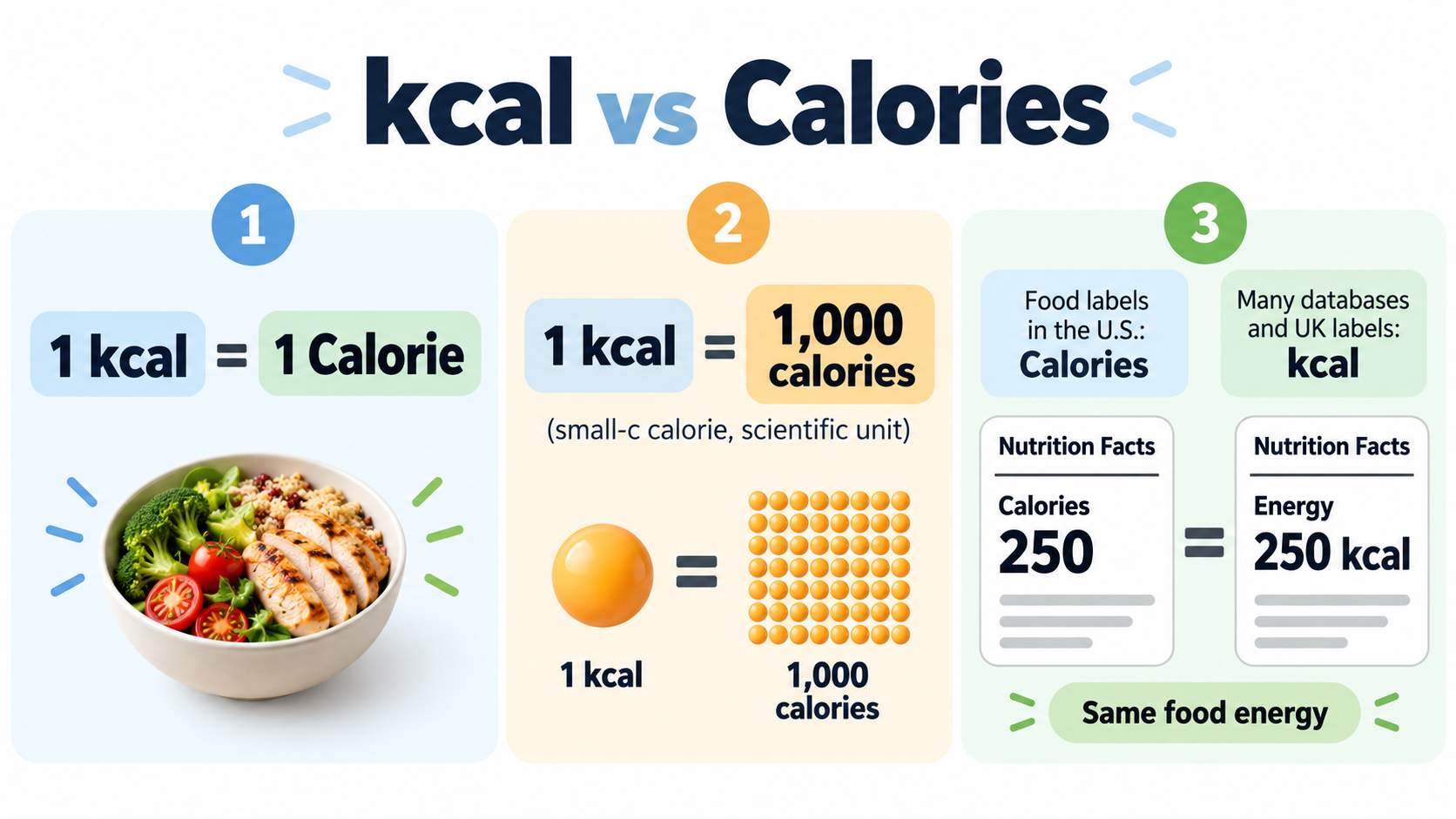
The confusion comes from an old naming convention. A small-c calorie is a scientific unit of energy. A kilocalorie contains one thousand of those units. Nutrition adopted the kilocalorie because the smaller unit would produce awkwardly large numbers for ordinary foods.
The kilocalorie also became known as the large Calorie, written with a capital C. Over time, everyday writing became less consistent about capitalization. That leaves us with “calorie” and “Calorie” appearing almost identical even though, in strict technical usage, they refer to different-sized units.
That is why the statement “a kcal contains 1,000 calories” can be technically correct and still send a nutrition discussion in the wrong direction. It is correct only when calories refers to the small scientific unit.
The Label Is Not Off by Three Zeros
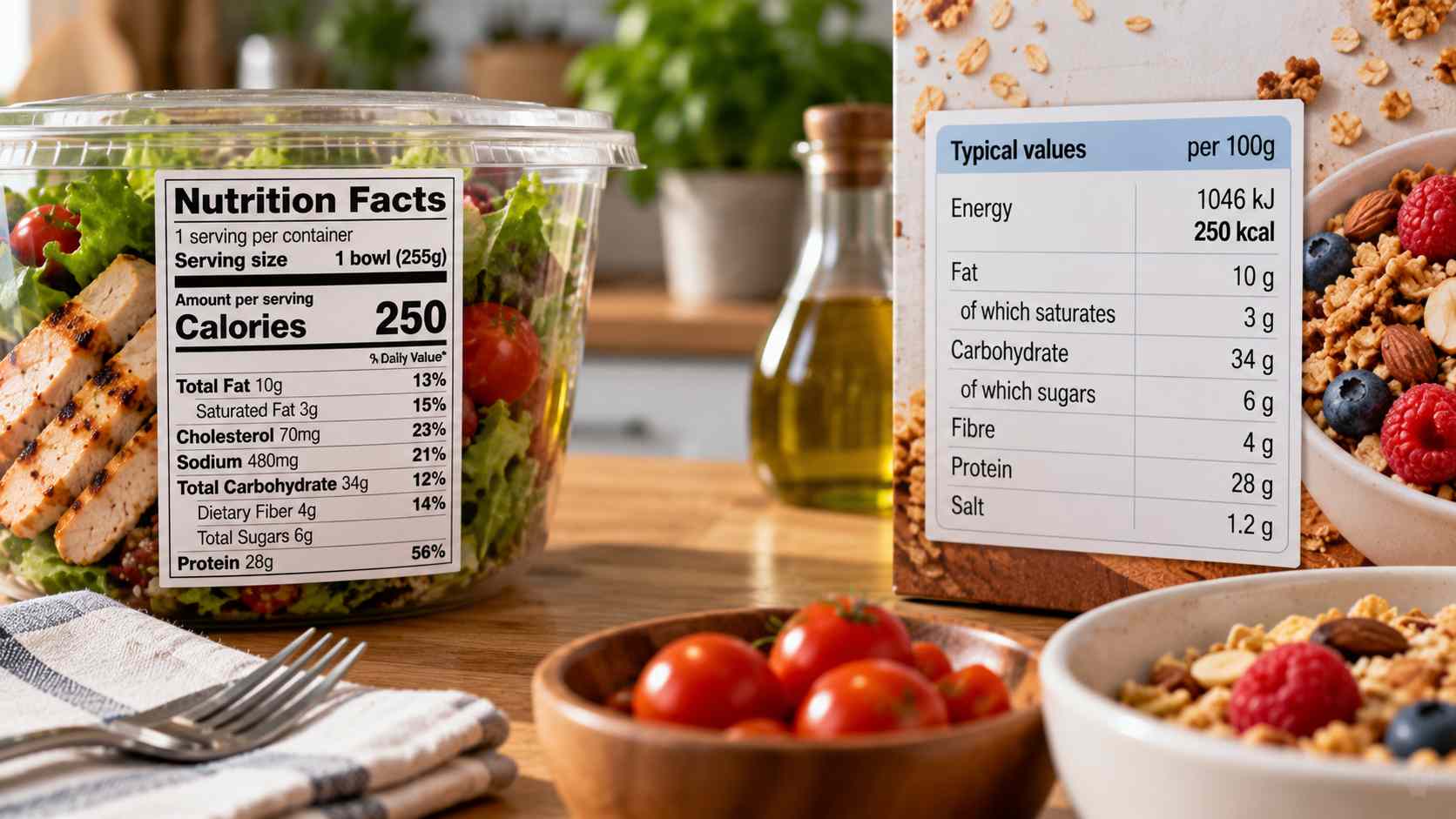
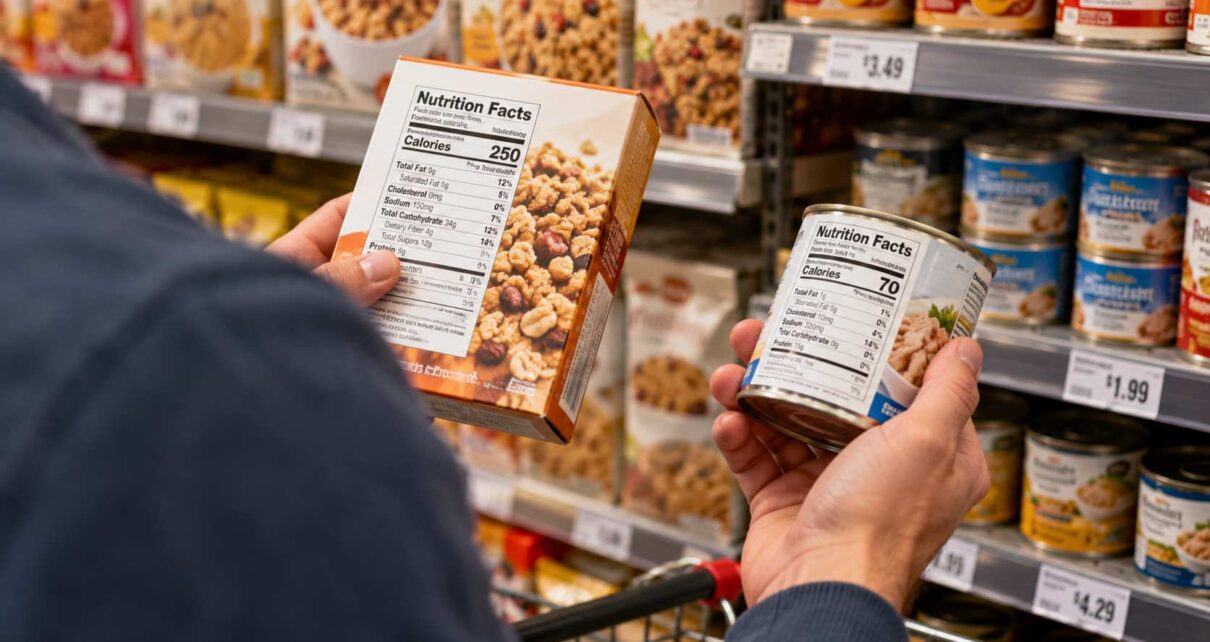
Suppose a U.S. Nutrition Facts label says:
Calories 250
A database or overseas label may describe the same amount of food energy as 250 kcal. There is no thousand-fold discrepancy.
USDA FoodData Central has displayed food energy in kilocalories (kcal) since October 2020. USDA also specifies that these values represent physiologically available energy after digestive and urinary losses, rather than gross combustion energy. FoodData Central explains both the unit and the way energy values are calculated.
You may also see kilojoules on a package. That is a different unit for the same physical quantity: energy. UK food labels commonly display both kJ and kcal.
When two nutrition values appear to disagree, one of the first checks is the unit. Before comparing the numbers, make sure both sources measure the same quantity in compatible units.
One Cat-Food Pouch Shows How the Confusion Starts
The Reddit thread began with a cat-food pouch labeled 13 kcal. The user had read that a kilocalorie contains a thousand calories and concluded that the small pouch somehow contained 13,000 calories in the everyday nutrition sense.
The arithmetic was fine. The definition attached to the word calorie was not.
In scientific units, 13 kcal can indeed be expressed as 13,000 small-c calories. On a food label or in a diet app, however, the useful comparison is 13 kcal to 13 food Calories.
The same issue appears when one tracking app uses kcal and another source uses Calories. If the numerical values match, there is no extra conversion step.
And for the end!
Saying that a kilocalorie is one thousand times larger than a small calorie is correct. Turning that fact into a claim that a 200-kcal food contains 200,000 food Calories is not.
The distinction matters because nutrition uses a larger unit while everyday language often drops the technical wording. USDA uses kcal. U.S. labels use Calories. UK labels commonly use kcal and kJ. They are different conventions for displaying food energy, not evidence that one label has lost or gained three zeros.
So when one source says Calories and another says kcal, compare the numbers directly.
And you can close Reddit before the thread reaches 200 comments.