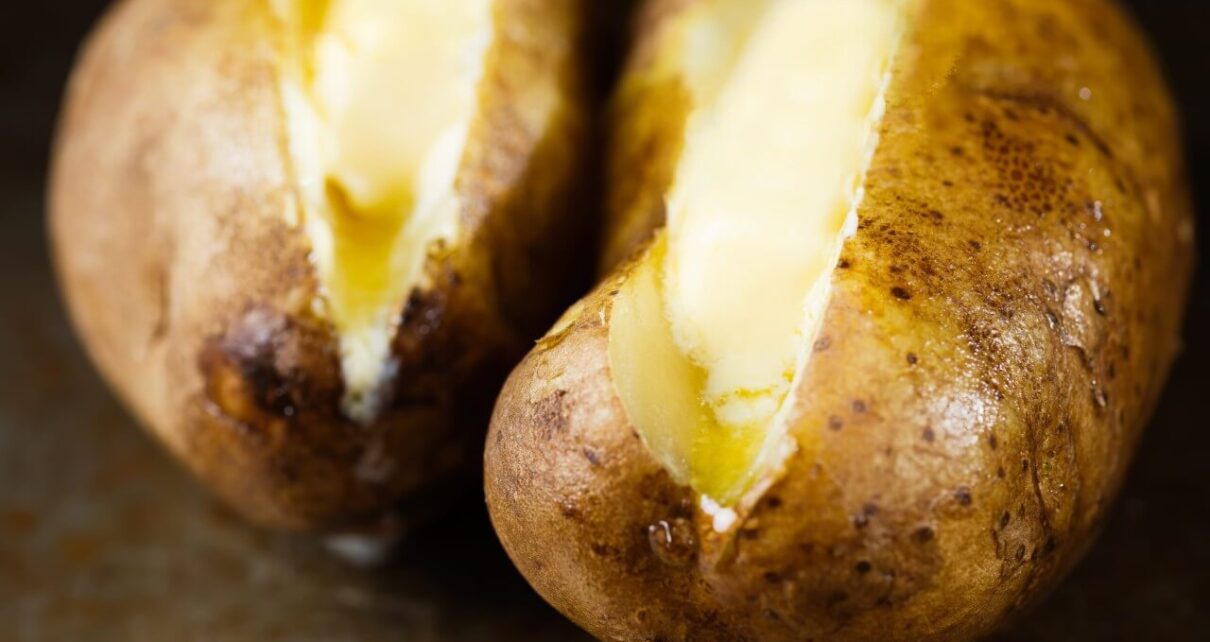
For a plain medium russet, calories in a baked potato come to about 164 before butter, sour cream, or another topping goes on. The USDA-based value used for a 173-gram baked russet with skin is about 95 calories per 100 grams.
USDA FoodData Central is the primary database behind many of the nutrition entries you will see elsewhere.
Before we move on, a few things are worth keeping in mind:
- The potato itself is only part of the final total.
- Serving size can change the calorie estimate more than people expect.
- Butter can raise the total quickly because it adds concentrated fat.
- Sour cream also changes the final count, especially when portions are estimated by eye.
- Database entries may differ because they describe different preparation methods or serving sizes.
- The cleanest approach is to calculate the plain potato first and add each topping separately.
Start With the Potato!
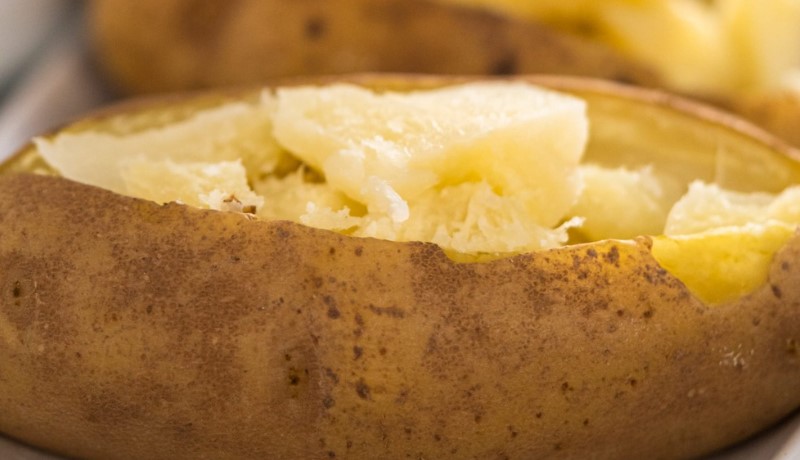
For a more reliable baked-potato calorie estimate, use grams rather than labels such as small, medium, or large.
A medium baked russet weighing about 173 grams contains roughly 164 calories, according to the USDA data summarized by Verywell Fit. That gives us a simple working value of about 95 calories per 100 grams.
For a 173-gram potato:
95 × 1.73 = about 164 calories
A larger potato changes the answer because there is simply more food. If the finished potato weighs 250 grams, the same calculation gives about:
95 × 2.5 = about 238 calories
That is why calories in a baked potato without a weight can only be an estimate. Nutracheck lists about 97 calories per 100 grams for a plain baked potato with skin, which is close enough to illustrate the same point.
Portion specifications matter for exactly this reason. A nutrition number can look inconsistent until the serving weights are placed side by side. We check those weights before assuming that two food databases disagree.
Butter Changes the Number
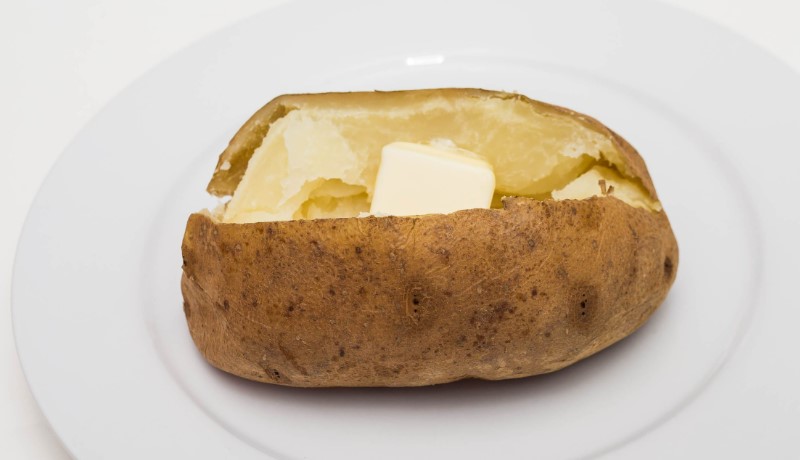
One full tablespoon of regular butter contributes about 100 calories. Add it to a medium 164-calorie potato and the plate moves to roughly:
164 + 100 = 264 calories
The calories in a baked potato have not changed. The potato still contributes about 164 calories. The extra energy comes from the topping.
That distinction sounds obvious, yet it becomes useful when people compare a plain baked potato with a cold potato, restaurant potato or a loaded version from a calorie app. One entry may describe only the potato. Another may include fat added after cooking.
Verywell Fit gives the same practical estimate: a medium baked potato with a tablespoon of butter comes to about 264 calories. A smaller pat of butter adds about 35 calories, which would leave the total just under 200.
Keep the plain baked potato on one line of a food record and the butter on another. Each number then represents a measurable part of the meal rather than an undefined “baked potato with butter.”
Sour Cream Adds Less Than Butter, but Portion Size Still Matters
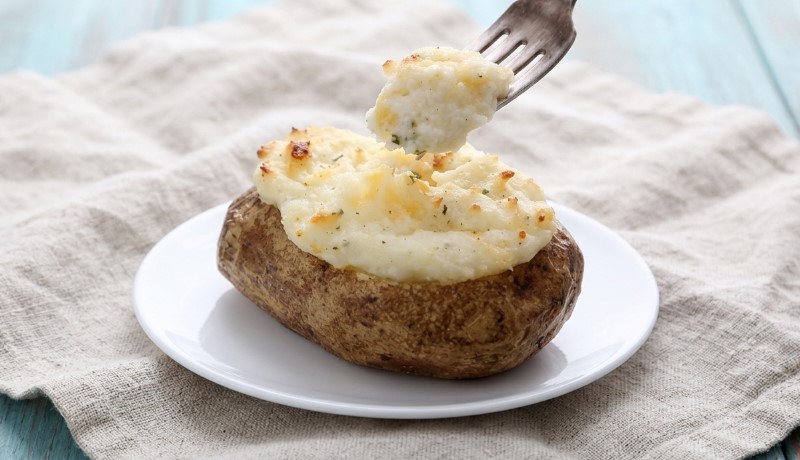
Regular sour cream adds about 57 calories per 29 grams, or roughly two tablespoons, according to USDA data summarized in the sour cream nutrition entry.
Put that on a medium baked russet and the calculation becomes:
164 + 57 = about 221 calories
Verywell Fit rounds a similar baked-potato example to about 224 calories. The small difference comes from rounding and the exact sour cream value used.
Add both one tablespoon of butter and two tablespoons of sour cream and a reasonable estimate becomes:
164 + 100 + 57 = about 321 calories
At that point, calories in a baked potato account for only about half of the total energy on the plate.
The calculation is still an estimate because a spoonful at home may not weigh exactly the same as a standardized tablespoon. “A little sour cream” is not a useful unit. Twenty-nine grams is.
Toppings are often the larger source of uncertainty. The plain baked potato is fairly easy to estimate once weighed, but amounts added by eye are less predictable.
Why Baked Potato Entries Can Still Disagree
Even before toppings appear, different databases can show different numbers. FatSecret has generic baked-potato entries that vary with preparation details, while other databases may use a different potato variety or a different final moisture level.
Water matters because baking reduces moisture. If two potatoes begin at the same raw weight but one loses more water in the oven, their finished weights can differ even though neither one gained calories from the heat. That is why calories in a baked potato per 100 grams can shift across references. A British-style jacket potato illustrates the same issue from another angle. The Kitchn uses a long bake to produce a dry, crisp skin, and greater moisture loss can affect the final weight and the calorie value per 100 grams.
How to Get a Cleaner Estimate
For a useful home estimate, weigh the finished baked potato and choose a database entry for a plain potato without added fat. Then count the toppings separately. If an app shows a surprisingly high number, check whether the entry already includes butter or another added fat.
A medium plain russet lands near 164 calories. A tablespoon of butter brings the plate close to 264, while two tablespoons of sour cream bring it to roughly 221. Both together put the estimate around 321. The number for calories in a baked potato still belongs to the potato. The rest belongs to what you put on top.