
The USDA entry for baked sweet potato gives a clear starting figure: 90 calories per 100 grams. Compare that with a Thanksgiving casserole recipe, and the calculation changes quickly.
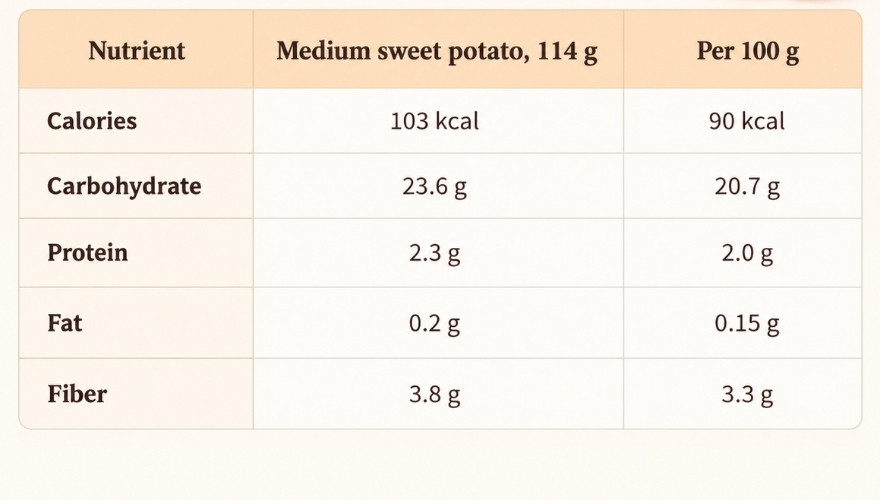
So how many calories in sweet potato are there? A sweet potato baked in its skin without salt has about 90 calories per 100 grams, and a medium 114-gram sweet potato comes to about 103 calories. Once the same food becomes a casserole with butter, brown sugar, and marshmallows, the total rises because the recipe adds new sources of energy.
A few questions help put the numbers into context. How much does one medium sweet potato provide? What do sweet potato macros look like before the holiday toppings? And what happens once a casserole recipe adds butter, sugar, and marshmallows?
One Medium Sweet Potato Is Closer to 100 Calories Than 200

The USDA’s baked sweet potato entry in Standard Reference Release 28, published in 2015, lists 90 calories per 100 grams of edible flesh. A medium sweet potato in that record weighs 114 grams, so the calculation is simple:
90 × 1.14 = 102.6 calories
Rounded, that is about 103 calories.
That calculation is more useful than judging size by eye. If the edible portion of your sweet potato weighs 180 grams, the same USDA value puts it at about 162 calories. Weight also explains why two apps can show different calories in sweet potato for foods they both call “medium.”
The same USDA record gives us the sweet potato macros. Per 100 grams, baked sweet potato contains about 20.7 grams of carbohydrate, 2.0 grams of protein, 0.15 grams of fat, and 3.3 grams of fiber.
Sweet Potato Macros by Weight
Why Baking Alone Does Not Create a Big Calorie Jump
When you bake a sweet potato without oil or other calorie-containing ingredients, you are not adding another energy source. What changes is mainly the amount of water, so the value per 100 grams can differ from a raw or boiled entry.
The USDA record lists about 75.8 grams of water per 100 grams of baked sweet potato. That detail matters when comparing calories in sweet potato, because 100 grams of finished baked food does not necessarily represent the same starting amount as 100 grams of raw sweet potato.
Match the weight to the database entry. If you weigh a baked sweet potato or a normal baked potato, use the baked-food value rather than a raw one. The same rule applies to sweet potato macros because the weight and the nutrient entry should describe the same form of the food.
It sounds like a small distinction, but it prevents a common calculation problem: weighing the finished food and applying numbers that belong to the ingredient before cooking.
Then Thanksgiving Casserole Changes the Math
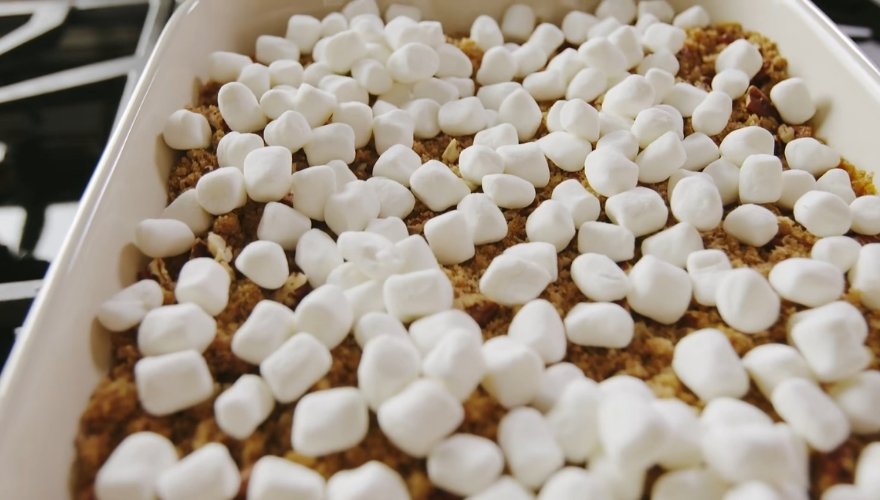
For a documented example, we used Pillsbury’s marshmallow-topped sweet potatoes, updated June 12, 2025. The recipe uses three 15-ounce cans of drained sweet potatoes, 1/4 cup of salted butter, 1/4 cup of packed brown sugar, and 15 large marshmallows. It makes eight servings.
Pillsbury lists 240 calories per serving, along with 44 grams of carbohydrate and 6 grams of fat. Compared with a medium plain baked sweet potato at about 103 calories, that is a difference of:
240 − 103 = 137 calories
For a closer look at how these ingredients come together, here’s a quick, detailed recipe for Marshmallow Sweet Potato Casserole by Sunny Swirl Home & Garden.
The sweet potato macros also change in a way the plain vegetable does not. A baked sweet potato has about 0.2 grams of fat at the medium size used above. The Pillsbury casserole serving has 6 grams, with butter supplying much of that increase, while brown sugar and marshmallows contribute additional carbohydrate.
That is why calories in sweet potato alone cannot tell you the calorie count of sweet potato casserole. Once the recipe changes, the whole recipe has to be counted.
A Few Questions the Numbers Raise
Is the skin included in the 103 calories?
The USDA entry describes a sweet potato baked in its skin, but the nutrient values apply to the edible flesh. The database lists skin as 22% refuse, and the 114-gram medium measure refers to the edible portion used for the nutrient calculation.
Are marshmallows the main reason casserole has more calories?
Not by themselves. The Pillsbury recipe also contains butter and brown sugar, so the added calories come from the combination. Butter makes the largest obvious change to sweet potato macros because plain baked sweet potato contains very little fat, just like the cold potato.
Is 240 calories still a useful answer for calories in sweet potato?
Not for a plain sweet potato. It is the calorie value for one serving of that specific casserole recipe, including the added ingredients.
Does “medium sweet potato” always mean 114 grams?
No. The USDA measure in this record uses 114 grams, but real sweet potatoes vary. If you want a closer estimate of calories in sweet potato, weighing the edible portion gives you a better starting point.
One Last Question
If you see sweet potatoes under a layer of marshmallows at Thanksgiving, how many of those calories came from the sweet potato itself? A medium plain baked sweet potato is about 103 calories.
A serving of the 2025 Pillsbury casserole is 240 calories, but that number represents the complete recipe rather than the vegetable alone.